
Begin your journey…
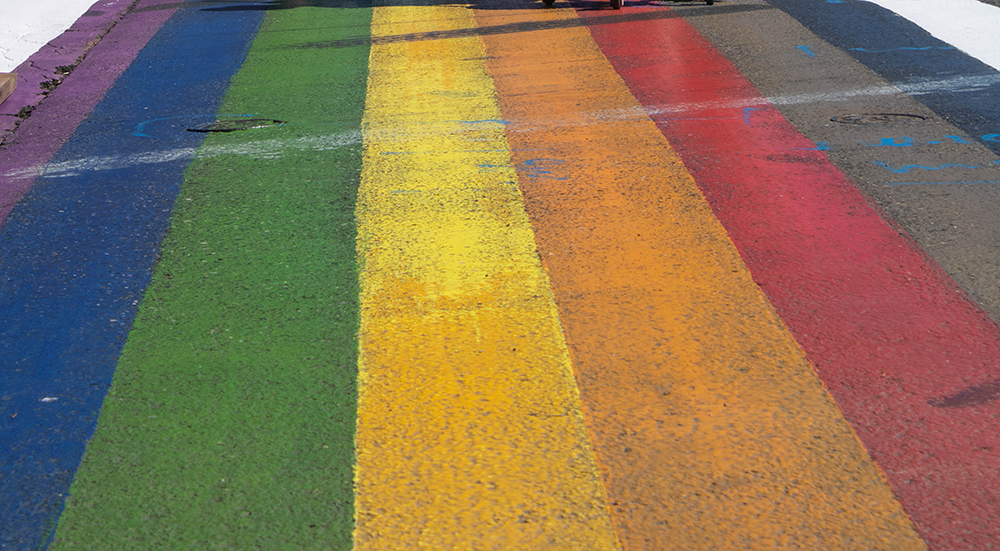
Photo courtesy of Danielle Beattie, CHS Class of 2024
Introduction
Diversity refers to the multitude of ways individuals and groups differ from each other, encompassing various characteristics like race, ethnicity, gender, age, religion, disability, sexual orientation, socioeconomic status, education, marital status, language, and physical appearance. It’s an all-encompassing concept that values and acknowledges the uniqueness of each person and group, including their ideas, perspectives, and values.
Equity ensures fair treatment, access, opportunity, and advancement for all while recognizing historical disparities and actively working to remove barriers that hinder full participation of certain groups. It acknowledges the existence of historically underserved and underrepresented populations and emphasizes the need to address unequal conditions to achieve equality in providing effective opportunities for everyone.
Creating inclusive environments involves fostering spaces where every individual or group feels welcomed, respected, supported, and valued, enabling them to fully participate. It emphasizes embracing differences and demonstrating respect for all individuals through both words and actions.
Foundation
Our goal as educators is to engage with individuals from a variety of backgrounds and identity groups in a productive and effective manner by demonstrating sensitivity, appreciate, respect, and responsiveness to cultural differences in practices, beliefs, and needs.
One of the first steps towards this goal is becoming aware of our own unconcious bias. In this video, Dr. Jennifer L. Eberhardt shares her experience with unconcious bias, the damage it can do, and ways to start to address our own unconcious bias.
Dr. Eberhardt elaborates on how to mitigate bias and manage it in the classroom in this podcast.
Training
Today, dehumanization often encourages bias and discrimination. Being aware of how the structure of modern society promotes dehumanization is a vital first step to promoting access and inclusion within a classroom or a school. This brief video outlines four “pillars” of our society that dehumanize the people around us.
Indifference and a lack of empathy lead to dehumanization. Here is a simple activity to do in a small group ideally after an adverse event within a larger group (school, community, etc.):
- Take a sheet of paper and fold it into 6 boxes.
- Write a brief description of the event in the center of the sheet.
- In each of the 6 boxes, answer the following questions:
- How did you learn of the event? From whom?
- What do people think about this event?
- What do I think about this event?
- How am I affected by this event?
- How were the people around me affected by the event?
- What is my role in developing a response or solution to this event?
- After everyone completes the questions, discuss the following:
- How are the responses from each member of the group similar? How do they differ?
- How were diverse viewpoints expressed within the group? If not, why not? If not, how can this be addressed going forward?
- What power do you have for change going forward?
- How can you lift up the power of others within the small group? Or do you need the support of others to feel powerful in this context?
- How can the smaller group use their diverse perspectives to promote change?
(This activity was adapted from the ECCD Field Guide by Creative Reaction Lab.)
This is an excellent way not only to explore reactions and resources after an event, but also promotes empathy and understanding, two essential elements in humanize those around us. This activity can also be used individually to explore your own relationship to wider events, the beliefs you hold, and the power you may/may not have in implementing change.
Strategy
Explore our curated collection of practical resources designed to support educators in fostering inclusive and diverse learning environments. From teaching strategies to classroom activities, our continuously evolving list covers a wide range of topics. These resources are tailored to help you create an environment where every student feels valued and empowered to succeed.
Not sure where to start? Check out how one teacher uses Community Agreements to create an inclusive environment at the start of the school year.
Community
Diversity Collective Resource
A possible resource for the Diversity Collective is bell hooks’ book Teaching to Transgress: Education as the Practice of Freedom. This video, produced when hooks died in 2021, explains how she was first and foremost a teacher and the value of reading her work.
Please use the Google form linked below to express your interest in this activity and the Collective.
Next Step
“The classroom, with all its limitations, remains a location of possibility. In that field of possibility we have the opportunity to labor for freedom, to demand of ourselves and our comrades, an openness of mind and heart that allows us to face reality even as we collectively imagine ways to move beyond boundaries, to transgress.”
– bell hooks
 mcvsddiversity.com